One Sensor.
Two Modes.
A single sensor that operates in either condition-monitoring mode (advisory anomaly signals and trend data) or forensic mode (event-bound, cryptographically sealed evidence). When the on-device AI detects a terminal failure, the sensor promotes itself into forensic mode and preserves the physical record as neutral evidence. Battery-powered. No cloud dependency.
Get notified when we publish new insights on bearing monitoring and equipment failure analysis.
Bearing Monitoring Across Three Critical Industries
Purpose-built sensor systems for the environments where bearings matter most — and where standard monitoring equipment can't survive.
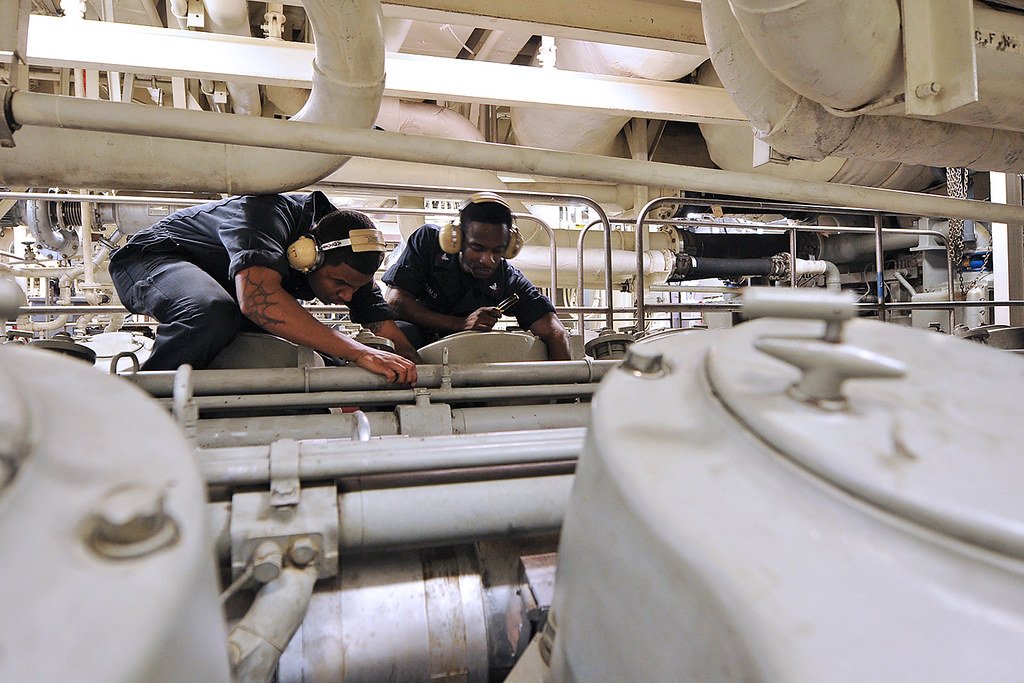
Marine Bearing Monitoring
Propulsion shaft bearings, stern tube bearings, and auxiliary machinery in saltwater environments where corrosion and vibration destroy conventional sensors. Our marine-grade enclosure and wireless BLE connectivity deliver real-time bearing condition data without cable runs through wet spaces.
- Real-time RMS, Peak-to-Peak, and FFT vibration analysis
- Corrosion-resistant 316L stainless steel housing
- Wireless Bluetooth Low Energy data transmission
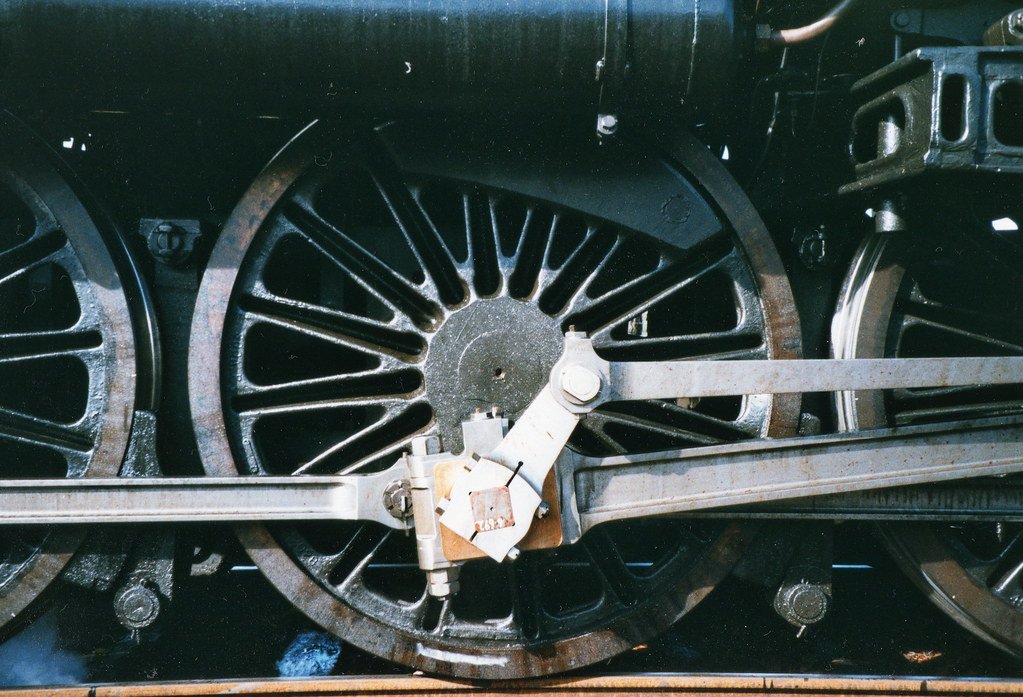
Railway Bearing Monitoring
Axle bearings, traction motor bearings, and gearbox bearings on rolling stock exposed to extreme temperature swings, constant vibration, and remote operation. BLE Mesh networking with LTE gateway connectivity delivers bearing health data from track-side or on-vehicle installations.
- Bearing defect detection: BPFO, BPFI, BSF, and FTF frequencies
- BLE Mesh + cellular LTE gateway to cloud
- Automated health scoring and windowed sampling
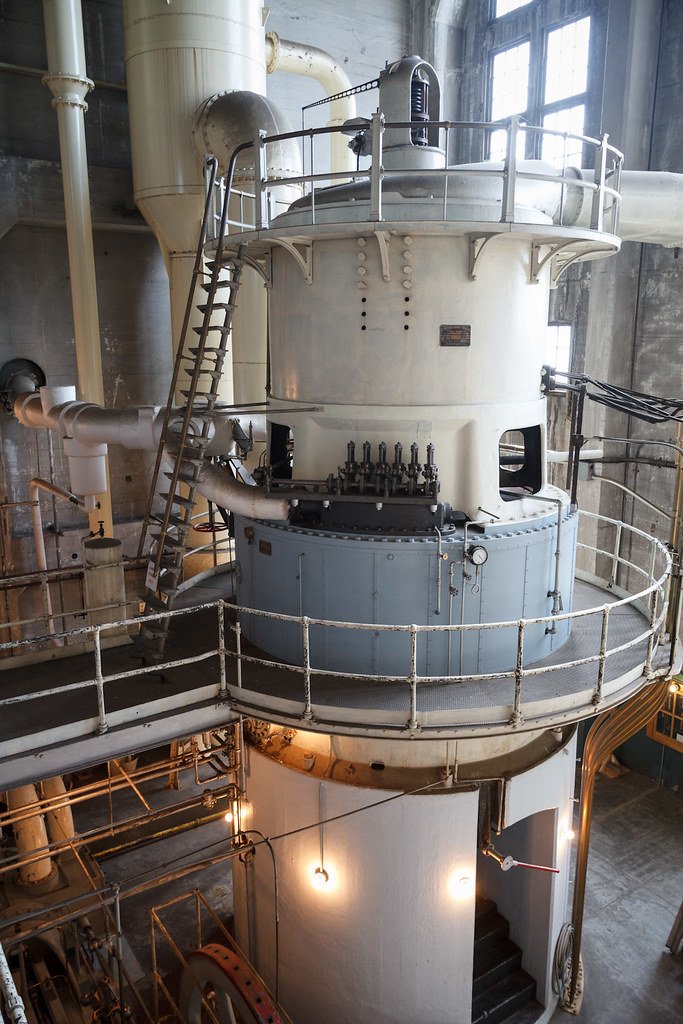
Industrial Bearing Monitoring
Compressors, turbines, gearboxes, pumps, and rotating machinery in process plants, power generation, and heavy manufacturing. Our FCC-certified LoRa sensor nodes cover entire facilities with long-range wireless connectivity and years of battery life.
- FCC-certified custom PCB design (RAK4631 + nRF52840)
- LoRa 902–928 MHz long-range wireless connectivity
- Multi-year battery operation, zero cable infrastructure
Two Modes, One Platform
The same sensor hardware runs two distinct firmware modes — switchable over the air. Deploy for predictive maintenance today. Have forensic-grade evidence ready when failure strikes.
Condition Monitoring (Predictive Maintenance)
Continuous vibration trending, health scoring, and advisory anomaly alerts. The gateway runs AI-powered anomaly detection and bearing defect classification locally — no cloud required. Surface developing anomaly signatures to inform inspection and maintenance practice.
- Continuous RMS, Peak-to-Peak, and FFT trending
- AI anomaly detection on the gateway
- Bearing defect classification (BPFO, BPFI, BSF, FTF)
- Health scoring with configurable alert thresholds
- Historical trend data for maintenance planning
Advisory, not prescriptive. Condition-monitoring signals carry no guarantee of detection and no duty of care. They inform — never replace — operator judgment, inspection, and maintenance practice. They are operational signals, never evidence.
Forensic Evidence Capture
Event-bound, high-frequency capture with cryptographic sealing. When the gateway AI detects a terminal failure event, the sensor promotes itself into forensic mode and preserves the physical record — sealed at capture, attributable, and architecturally neutral.
- Pre-event and post-event high-frequency capture
- Cryptographic sealing at moment of capture
- Multi-party key control — no single party can suppress evidence
- Chain-of-custody metadata, sealed with the evidence
- Tamper-evident — any alteration invalidates the record
Authorized Mode Transitions
The sensor's mode is controlled by exactly two sources: the on-device edge AI (autonomous promotion when anomaly thresholds are crossed) or Fault Ledger via signed over-the-air command in response to your request. End customers cannot directly toggle the mode — this is what makes forensic neutrality credible.
- Edge-AI autonomous promotion (condition monitoring → forensic on terminal-event detection)
- Vendor-signed OTA command on customer request, no hardware swap or physical access required
- Every mode transition is timestamped, authorized, and sealed in the audit trail
- Mixed-mode deployments across a facility (per-sensor configuration)
What Makes Fault Ledger Different
The bearing condition monitoring market is crowded with single-purpose sensors. Three things set Fault Ledger apart.
Dual-Use Architecture
Most bearing sensors do one thing: predictive maintenance or data logging. Fault Ledger does both from the same hardware. One sensor platform runs predictive maintenance firmware for day-to-day monitoring and forensic evidence firmware for failure capture — switchable over the air.
- Condition-monitoring mode — continuous trending, AI anomaly detection, health scoring, and advisory anomaly alerts (advisory, no duty of care)
- Forensic evidence mode — event-bound capture with tamper-evident sealing and chain-of-custody
- Authorized mode transitions — edge AI promotes autonomously; vendor-signed OTA on customer request; customers cannot directly toggle the mode
- Mixed-mode fleets — run some sensors in condition-monitoring mode and others in forensic mode across the same facility
AI Edge Processing
The Fault Ledger gateway runs anomaly detection and bearing defect classification locally — and when it identifies a critical failure event, it automatically triggers forensic capture mode without operator intervention. No cloud dependency, no latency, no human required in the loop.
- Autonomous forensic triggering — when the AI detects a terminal failure event, it automatically initiates forensic capture without waiting for operator input
- On-gateway anomaly detection — identifies abnormal vibration patterns in real time without internet connectivity
- Bearing defect classification — AI models trained on BPFO, BPFI, BSF, and FTF spectral signatures
- No cloud dependency — works in air-gapped facilities, remote marine installations, and environments with no internet
- Data sovereignty — sensitive vibration data never leaves your facility unless you choose to export it
Built to Survive Where Other Sensors Fail
Most vibration sensors are designed for controlled environments. Ours are engineered for the worst conditions on Earth — and they're portable enough to move between machines.
- 316L stainless steel enclosure — corrosion-resistant in marine saltwater, chemical process plants, and outdoor railway installations
- Magnetic mounting with direct vibration coupling — no signal attenuation, orientation-independent, installs in seconds
- Battery-powered and portable — move sensors between machines for walk-around diagnostics or redeploy across facilities
- Fully wireless — no cable runs, no facility power dependency, no single point of wiring failure
How Fault Ledger Works
From deployment to predictive monitoring to forensic evidence capture — on a single platform.
Deploy & Connect
Mount the sensor magnetically on any ferromagnetic bearing housing. Direct vibration coupling through the metal shell ensures high-fidelity signal capture. The sensor connects wirelessly via BLE, LoRa, or LTE — no cables, no facility infrastructure required. Battery-powered with multi-year life.
Condition Monitoring: Surface & Inform
In condition-monitoring mode, the sensor continuously captures vibration data. The gateway runs AI-powered anomaly detection and bearing defect classification locally — surfacing developing BPFO, BPFI, BSF, and FTF signatures as advisory anomaly signals to inform inspection and maintenance practice. The AI also continuously evaluates whether conditions warrant a forensic-mode promotion, ready to transition the moment a terminal event is detected.
Forensic Mode: Capture & Seal
The sensor maintains a continuous rolling buffer of high-frequency vibration data. When the gateway AI detects a terminal failure event — via shock threshold, spectral discontinuity, or acoustic transient — it automatically freezes the pre-event buffer, captures post-event data, and cryptographically seals the complete evidence package on-device. No human intervention required.
Mode Transitions Are Authorized and Auditable
Mode changes are authorized by exactly two sources: the on-device edge AI (autonomous PM → forensic promotion on terminal-event detection) or Fault Ledger via signed OTA command in response to your request. End customers cannot directly toggle the mode — this preserves vendor neutrality once the sensor is in forensic mode. Every transition is timestamped, authorized, and sealed in the audit trail.
Sensor Hardware Built for Real-World Bearing Monitoring
Every design decision prioritizes signal fidelity and environmental survivability.
316L Stainless Steel Construction
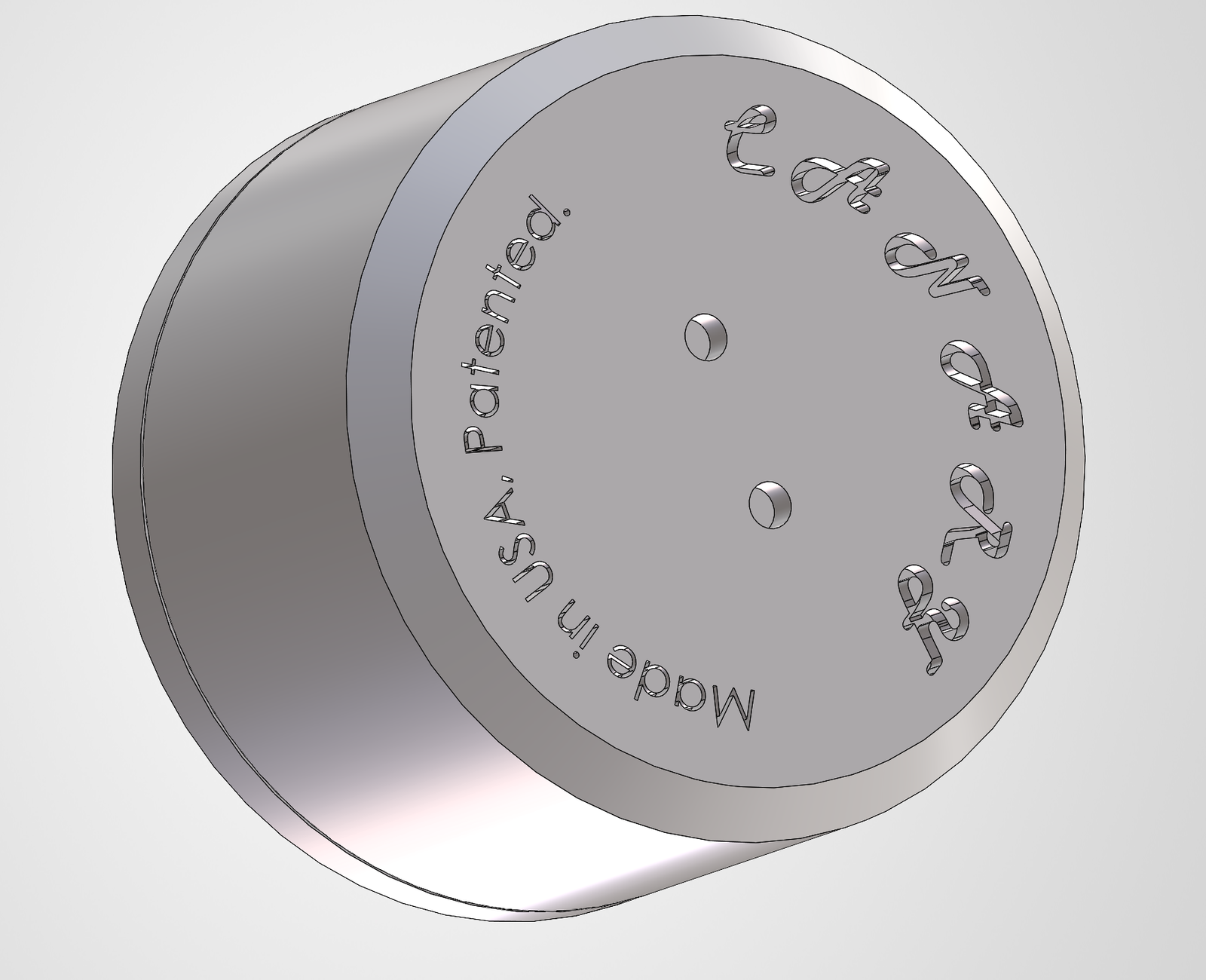
CNC-machined from marine-grade 316L stainless steel. 70mm diameter cylindrical design with M60x1.5mm precision threading. Resists saltwater corrosion, chemical exposure, and mechanical impact in the harshest operating environments.
Direct Vibration Coupling
Magnetic base mounting transmits vibration directly through the metal shell into the sensor — no vibration isolation, no signal attenuation. Orientation-independent and portable: move sensors between machines in seconds for walk-around diagnostics or permanent deployment.
Multi-Protocol Wireless
BLE for close-range marine deployments. BLE Mesh with LTE gateway for railway installations. LoRa 902–928 MHz for industrial facilities requiring long-range coverage. Every protocol is wireless — zero cable infrastructure required.
AI Edge Processing
The gateway runs anomaly detection, bearing defect classification, and health scoring locally using trained AI models. No cloud latency. No data egress. No internet dependency. Sensitive vibration data stays on-premises unless you choose to export it.
Battery-Powered & Portable
Every sensor operates on battery power, independent of facility infrastructure. Magnetic mounting enables rapid redeployment between machines — from walk-around diagnostic routes to permanent installations. Multi-year battery life, zero cabling.
Designed and Made in the USA
Custom PCB design. FCC-certified electronics. Patented enclosure. Every Fault Ledger bearing monitoring sensor is designed and manufactured in the United States with full hardware traceability.
Beyond Monitoring: Forensic-Grade Bearing Failure Evidence
Most bearing monitoring sensors tell you a bearing is degrading. Fault Ledger also preserves exactly what happened when it failed — creating a defensible, tamper-evident record for disputes, insurance claims, and root cause analysis.
Tamper-Evident Data Sealing
Bearing failure data is cryptographically hashed and sealed on-device the moment capture concludes. Any alteration attempt invalidates the record. Integrity is provable, not promised.
Multi-Party Key Control
Evidence decryption requires multiple independent keys. No single party — operator, OEM, insurer, or vendor — can access or suppress the bearing failure record alone. Neutrality is architectural.
Pre-Event and Post-Event Capture
The rolling buffer preserves high-frequency bearing vibration data from before the failure event. Combined with post-event capture, the sealed record shows the complete physical story of the failure.
Chain-of-Custody Metadata
Every evidence package includes full chain-of-custody metadata for use in warranty disputes, insurance claims, litigation, and root cause investigations.
When bearings fail, the data speaks for itself.
Frequently Asked Questions
Common questions about the Fault Ledger bearing sensor platform.
Can one sensor do both condition monitoring and forensic evidence capture?
Yes. The same Fault Ledger sensor hardware operates in two distinct modes: condition monitoring (continuous trending, health scoring, AI anomaly detection — advisory only) and forensic evidence capture (event-bound, tamper-evident, chain-of-custody). The sensor's mode is controlled by the on-device edge AI (autonomous promotion when anomaly thresholds are crossed) or by Fault Ledger via signed over-the-air command in response to your request — end customers do not directly toggle the mode. Mixed-fleet deployments (some sensors in each mode) are supported.
What AI processing does the system include?
The Fault Ledger gateway runs AI-powered anomaly detection and bearing defect classification locally. Trained models identify abnormal vibration patterns and classify bearing defect signatures (BPFO, BPFI, BSF, FTF) in real time — without sending data to the cloud. This edge processing approach eliminates latency, bandwidth costs, and internet dependency, and keeps sensitive equipment data on-premises.
Can I move sensors between machines?
Yes. Every Fault Ledger sensor is battery-powered with magnetic mounting — it installs in seconds and requires no cables, drilling, or facility infrastructure. You can use sensors for walk-around diagnostic routes across multiple machines, trial monitoring before committing to a permanent deployment, or rapid redeployment between facilities. The same portability makes them ideal for monitoring rental, leased, or seasonal equipment.
What bearing defect frequencies does the system detect?
Fault Ledger sensors perform on-device FFT spectral analysis to identify the four primary bearing defect characteristic frequencies: Ball Pass Frequency Outer Race (BPFO), Ball Pass Frequency Inner Race (BPFI), Ball Spin Frequency (BSF), and Fundamental Train Frequency (FTF). These frequencies are calculated from bearing geometry and shaft speed, allowing early detection of outer race, inner race, rolling element, and cage defects.
How do Fault Ledger sensors survive marine and offshore environments?
Every sensor is housed in a CNC-machined 316L stainless steel enclosure — the same marine-grade alloy used in marine hardware and chemical processing. The fully wireless, battery-powered design eliminates cable penetrations. Magnetic mounting requires no drilling or welding. The patented tamper-proof design resists environmental ingress, corrosion, and mechanical impact.
What makes these sensors different from standard predictive maintenance vibration sensors?
Three things. First, dual-mode: the same sensor operates in either condition monitoring (advisory anomaly signals; no guarantee of detection, no duty of care) or forensic evidence capture (event-bound, sealed, chain-of-custody) — with the boundary between the two enforced architecturally, not by policy. Second, edge AI: the gateway processes anomaly detection and defect classification locally with no cloud dependency. Third, forensic-grade capture: when a bearing fails, the system seals the high-frequency data from before, during, and after the event in a tamper-evident, cryptographically sealed record. Standard sensors report averages. Fault Ledger preserves the raw physics.
What wireless connectivity options are available?
Fault Ledger offers three wireless protocols matched to deployment environments: Bluetooth Low Energy (BLE) for close-range marine installations, BLE Mesh with cellular LTE gateway for railway and remote asset monitoring, and LoRa (902–928 MHz) for industrial facilities requiring long-range coverage across entire plants. All protocols are fully wireless with zero cable infrastructure.
How does the forensic failure capture work?
The sensor continuously maintains a rolling buffer of high-frequency vibration data. When the gateway AI detects a terminal bearing failure — via shock threshold, spectral discontinuity, thermal excursion, or acoustic transient — it automatically freezes the pre-event buffer, continues post-event capture for a fixed window, then cryptographically seals the complete evidence package on-device. No operator action required. The result is a tamper-evident record of exactly what occurred physically during the failure.
Can the bearing failure data be used in legal proceedings or insurance claims?
The system is designed to support that use, but admissibility and weight are decisions made by courts, regulators, and the parties to a given dispute — not by the device or by Fault Ledger. The sealed evidence package includes full chain-of-custody metadata. Decryption requires multiple independent keys — no single party can unilaterally access, alter, or suppress the record. The cryptographic seal is verifiable: any attempt to alter the data invalidates it. This architecture is built specifically to support use in warranty disputes, insurance claims, litigation, and multi-party failure investigations. It does not, by itself, determine legal outcomes.
Discuss Your Bearing Monitoring Needs
Whether you need predictive maintenance monitoring, forensic evidence capture, or both — tell us about your environment and we'll discuss whether Fault Ledger is the right fit.
Or email us directly: erik@faultledger.com